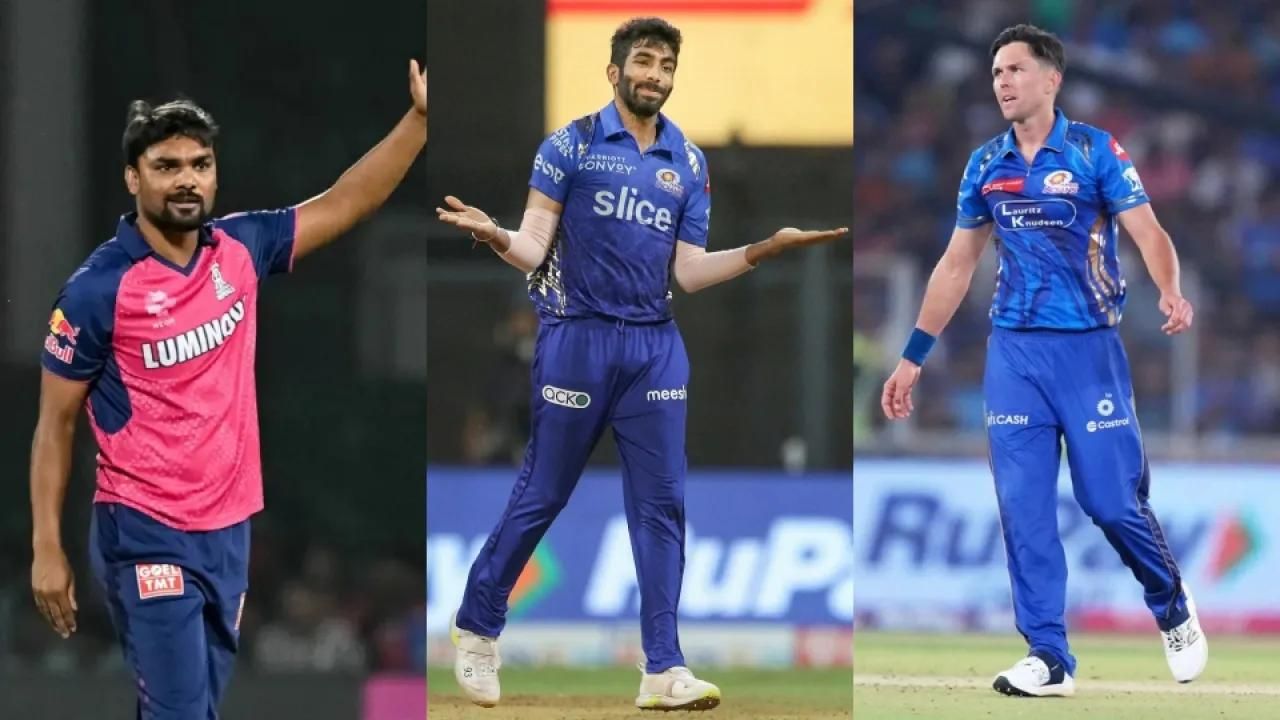
A 36-year-old swing bowler, in what many assumed would be a quiet farewell season, is leading the IPL 2026 Purple Cap race with 17 wickets from 9 games and an economy of 7.54. Bhuvneshwar Kumar is not just surviving. He is dominating.
And it is not just him. Anshul Kamboj came into this season with almost zero hype and has quietly matched Bhuvneshwar, wicket for wicket. Jofra Archer is bowling with genuine malice when fit. Kagiso Rabada, the man who took 30 wickets in a single IPL season betting back in 2020, is creeping up the charts again.
For anyone doing IPL top bowler betting, this season is genuinely interesting because no single bowler has pulled away from the field. Five wickets is the difference between first and fifth place. One good game changes everything.
But here is the thing about bowling markets that most bettors underestimate. Wickets are not like runs. You cannot just look at who is in form and back them blindly. You need to understand surface conditions, batting matchups, which phase of the innings a bowler operates in, and critically, whether their team is still in the playoff race. All of that shapes how many wicket-taking opportunities they actually get.
This guide covers the full picture. Updated Purple Cap standings, a real breakdown of each contender, historical context, and a practical framework you can use for every remaining game of IPL 2026.
How These Markets Actually Work
A quick rundown before we get into the players, because understanding the market structure changes how you bet.
Match Top Wicket-Taker
You pick a bowler to take the most wickets in that specific game. Both innings count. The market settles once the match ends. If two bowlers finish equal, the one with the better economy in that match wins.
A few things most people do not think about here. A bowler who takes 2 wickets in the first innings can still lose this market to someone who takes 2 wickets in the second innings. And in low-scoring matches, 2 wickets is often enough to win the market outright. At a high-scoring venue like Chinnaswamy, you might need 3 or 4.
Season Purple Cap
This is the big one. You back a bowler to finish as the highest wicket-taker across the full season, league games and playoffs included. Odds are available all season, and they shift after every match.
Tiebreaker: If two bowlers finish equal on wickets, the one with the lower economy rate wins. This matters a lot right now because Bhuvneshwar (7.54) and Kamboj (8.49) are level on wickets, but Bhuvneshwar holds the cap.
In-Play Bowling Fancy Markets
These run live through every match. You can bet on whether a specific bowler takes more or fewer wickets than a set line, which over the first wicket falls in; what method the next dismissal is; total powerplay wickets; and ball-by-ball outcomes. Odds update constantly, and the windows to bet are short. Following the live score while these markets are open is not optional. It is how you get the right price before it moves.
IPL 2026 Purple Cap: Where the Race Stands
After Match 44 (CSK vs MI, May 2, 2026):
1. Bhuvneshwar Kumar (RCB): 17 wickets, economy 7.54
2. Anshul Kamboj (CSK): 17 wickets, economy 8.49
3. Jofra Archer (RR): 15 wickets
4. Eshan Malinga (SRH): 15 wickets
5. Kagiso Rabada (GT): 14 to 16 wickets
Two runs separate first and third. This is as tight as it gets at this stage. Source: Khel Now and News9Live post-match updates, verified May 3, 2026.
The Contenders: An Honest Look at Each One
Bhuvneshwar Kumar, RCB
Let's start with the headline. Bhuvneshwar became the first pace bowler in IPL history to take 200 IPL wickets this season. He is also the first Indian fast bowler to reach 350 T20 wickets across all formats. These are not hollow milestones. They tell you something about his consistency over a very long time.
He is the only bowler to ever win the Purple Cap in back-to-back seasons, doing it with Sunrisers Hyderabad in 2016 and 2017. And now, nine years later, he is leading the race again.
What is actually driving his wicket count this season is not pace. It never was with him. It is a shape. He gets the ball to move late and at a length that forces top batsman betting 2026 to commit. Against DC in Match 39, he took 3 for 5 in 3 overs and was the main reason they were bowled out for 75, the lowest ever total at Arun Jaitley Stadium. That is not luck. That is a bowler who knows exactly what he is doing on every surface.
The reason he is the most reliable pick in IPL's highest wicket-taker odds markets is simpler than people make it: he plays for RCB, who are second in the table and heading to the playoffs. That means he gets the new ball in every remaining league game and in knockout matches too. An economy of 7.54 with 17 wickets from 9 games, on a contending team, at 36 years old. Back him.
Anshul Kamboj, CSK
Nobody was talking about Kamboj in March. CSK was inconsistent, their bowling attack looked patched together, and Kamboj was the name you had to Google twice. Now he has 17 wickets from 9 matches and is the joint leader of the Purple Cap race.
What he does well is take wickets in the middle overs, the 10 to 16 range where most bowlers just try to contain. He uses the crease well, bowls at awkward angles, and has variations that batters are still figuring out. In Match 44 against MI, he picked up 3 more wickets to help bowl MI out for 159. CSK chased it in 18.1 overs.
But here is the problem. CSK are out of the playoff race. When teams get eliminated, they rotate. Senior players get rested. Young bowlers trying to make their mark in the last few games may play instead of established performers. Kamboj might not bowl in 3 or 4 of CSK's remaining matches. That changes the entire calculation for anyone holding a season-long Purple Cap position on him.
If you are betting on him match by match when CSK plays, fine. His form is real, and his wickets are coming against decent batting lineups. For the full-season Purple Cap? The team context is a genuine risk that Bhuvneshwar does not carry.
Jofra Archer, RR
There are two versions of Jofra Archer. The healthy one, who bowls 140 km/h, shapes the ball both ways, and takes wickets in every phase of the game. And the managed one, where RR and his support team are counting his balls bowled per week and making conservative decisions.
In IPL 2026, we have mostly seen the first version. 15 wickets from his matches played. Against LSG in the RR clash, he took 3 wickets and went for only 20 runs from 4 overs, dismissing Aiden Markram, Mohammed Shami, and Mayank Yadav. He bowled fast and he bowled smart.
For top bowler prediction IPL match markets, Archer at pace-friendly venues is one of the most reliable bets in the tournament. He generates edges from top-order batters with his length, takes wickets with the bouncer from middle-order players who get underneath it, and cleans up the tail with yorkers when needed.
The only thing you have to do before backing Archer in any market is check the fitness news from RR. "Assessed before selection" is the phrase you do not want to see. His history is well-documented. The stress fractures that cost him years of cricket have never fully disappeared as a concern. One precautionary rest can turn a 2-wicket night into zero contribution. For the season Purple Cap market, that uncertainty is real. For match-by-match IPL top bowler betting, he is excellent value when confirmed fit and bowling at full pace.
Eshan Malinga, SRH
Malinga came into the tournament without international cricket on his CV and has taken 15 wickets in IPL 2026. That genuinely surprised a lot of people.
His action creates angles that batters find difficult to read early in their innings. He has been most effective for SRH when bowling in the 7 to 14 over range where batters are trying to set up for the death overs and are slightly vulnerable to something they have not seen much.
The thing worth noting is that his economy rate is meaningfully higher than Bhuvneshwar and Archer. Teams are starting to figure out his lengths and scoring more freely off him. The first half of a season is often kinder to bowlers opponents have not prepared for. As the data on him builds up and teams watch more footage, his wicket-taking in the back half may slow.
SRH's inconsistency as a team also matters here. On their bad days, Malinga bowls in matches where the opposition is chasing big totals and attacking every ball. That environment produces runs more than wickets. For match-by-match markets, pick your spots with him carefully based on the specific matchup and surface rather than backing him broadly.
Kagiso Rabada, GT
Rabada is probably the most underrated name in the current IPL 2026 Purple Cap conversation.
This is a man who took 30 wickets for Delhi Capitals in IPL 2020, the only player to come close to the all-time record held jointly by Dwayne Bravo and Harshal Patel (both at 32 wickets). He won the Purple Cap that year. He knows how to build a wicket count across a full season.
In IPL 2026, GT beat PBKS on May 3 and moved to 12 points on the table. They are in the playoff race. Rabada has been central to GT's bowling attack alongside Jason Holder, who took 4 wickets in the PBKS game. The combination of Rabada and Holder means GT batters are not the only ones carrying the side.
If GT make the playoffs, Rabada plays 3 to 4 extra matches. He starts those matches 14 to 16 wickets behind Bhuvneshwar. One big haul, say 4 wickets in a semifinal, and suddenly the Purple Cap race is very different. For anyone looking at season-long purple cap betting IPL markets with a slightly longer view, Rabada at his current odds represents value that the other contenders' prices do not.
What History Tells You That Current Form Does Not
The Purple Cap record is worth knowing properly before betting.
Dwayne Bravo (CSK) and Harshal Patel (RCB) share the record for most wickets in a single IPL season: 32 each in 2013 and 2021 respectively. Kagiso Rabada finished with 30 for DC in 2020, the only other player to breach the 30-wicket mark in a season.
Both Bravo and Harshal won it while playing for teams that reached the playoffs. Bravo won it twice (2013, 2015). Harshal won it twice too (2021, 2024). Bhuvneshwar is the only bowler to win it in consecutive seasons (2016, 2017).
The 2025 Purple Cap went to Prasidh Krishna (GT) with 25 wickets. The 2024 cap went to Harshal Patel (PBKS) with 24 wickets.
One pattern is clear across all of these seasons. The Purple Cap winner almost always plays for a team that goes deep into the knockout stage. More games equals more wickets. A bowler on an eliminated team can lead the charts in mid-April and still lose the cap by the time the final is played. Keep that in mind for any position you hold on Kamboj (CSK) right now.
A Strategy Framework for Every IPL Bowling Betting Tips Market
Knowing the players is only part of it. The other part is knowing which situations to back them in.
Read the pitch before anything else
This sounds obvious but most bettors skip it. A green seaming track at Delhi in April morning conditions is very different from a dry, spinning Chepauk surface that has been used twice already. Bhuvneshwar on a seaming track is one bet. Bhuvneshwar on a flat Wankhede wicket is a different one entirely.
Chepauk (Chennai): Slow and low. Wickets come from spin in the middle overs and from batters who are not used to the two-paced nature of the surface. Pace bowlers take wickets early or not at all here.
Eden Gardens (Kolkata): Wrist spin gets purchase. Left-arm pace works well with the angle. Middle-order wickets are more common than powerplay ones.
Wankhede (Mumbai): Flat after the first 4 overs. The top wicket-taker at Wankhede usually picks up 2 rather than 3, so the margin for error in match top-wicket-taker bets is smaller here.
Chinnaswamy (Bengaluru): Bowlers go for runs. Wickets come from aggressive mishits and from death bowling that forces bad shots. Spinners get more purchase here than people expect.
Match the bowler to the phase they bowl in
Powerplay specialists (overs 1 to 6): Bhuvneshwar, Archer, Rabada. At seam-ing venues, these three offer the most value in matched top wicket-taker markets because the first 6 overs produce the highest proportion of wickets at most IPL grounds.
Middle-over specialists (overs 7 to 15): Kamboj does most of his damage here. Spinners with control and variation, like Suyash Sharma (RCB) or Ravi Bishnoi (LSG), also operate here. Back them specifically at slow-turning tracks.
Death specialists (overs 16 to 20): This phase produces wickets from aggression. Batters swinging hard for the boundary edge to a well-placed third man. Bowlers conceding bad yorkers that get swatted to mid-on. Death wickets are the hardest to specifically predict in pre-match markets.
The batter-versus-bowler matchup
DC's middle order has been vulnerable to wrist spin all season. They collapsed to 75 all out in Match 39, and their batting has looked fragile throughout. A high-quality leg-spinner confirmed in the opposition XI against DC is worth noting for the match's top wicket-taker market.
SRH's aggressive opening pair (Abhishek Sharma and Travis Head types) takes risks early. A swing bowler with good control at a venue that offers movement has historically done well against this kind of approach. The powerplay session against SRH at the right ground is a decent bet for an Archer or Bhuvneshwar type.
Remaining games and team position
Before placing any season-long Purple Cap position, work out how many games each contender still has available.
RCB are second in the table, heading to the playoffs. Bhuvneshwar gets every remaining league game and at least 2 knockout games. GT is in the race at 12 points. Rabada gets the same benefit if they qualify. Kamboj (CSK) and potentially Malinga (SRH), depending on SRH's position, are at risk of rotation or rest in the back end of the season.
Where the Value Sits Right Now in IPL Highest Wicket Taker Odds
Three honest reads on the current market:
Bhuvneshwar is the safest season-long bet. Economy advantage, playoff-bound team, historical pedigree, and no injury concerns flagged. The price may not be long but the structure behind the bet is the cleanest in the field.
Rabada is the value bet for bettors comfortable with slightly more uncertainty. His historical ceiling (30 wickets in a single season) is the highest of anyone in this race. GT in the playoffs adds games. His current wicket count still gives him a realistic path to the Purple Cap with a strong run.
Archery matches by match at pace-friendly venues are where the edge genuinely exists in non-season markets. His odds in match top wicket-taker markets are frequently longer than his actual probability of finishing as the top. But the bet only works when his fitness is confirmed on match morning.