In Match 46 at Ahmedabad, GT chased 163 down in 19.5 overs, winning by 4 wickets off the penultimate ball of the last over. Washington Sundar hit the winning six off Marcus Stoinis.
Virender Sehwag's reaction was direct: "If that last over was bowled by Arshdeep Singh, Xavier Bartlett, or Marco Jansen, then maybe PBKS could have won this match." Manoj Tiwary said Chahal should have been used against Buttler in the middle overs, where wrist spin could have changed the match's direction completely.
That single tactical decision cost PBKS a win. And for any bettor who was tracking the live match winner market, Chahal's absence from the bowling rotation in overs 7 to 13 was a visible signal that PBKS were underutilizing their resources.
This is what IPL captaincy impact means in practice. It is not an abstract quality. It is bowling rotations, toss decisions, IPL best batting lineup order adjustments, and impact player timing. Every one of those decisions shifts the match's probability and shows up in the live odds if you know what to look for.
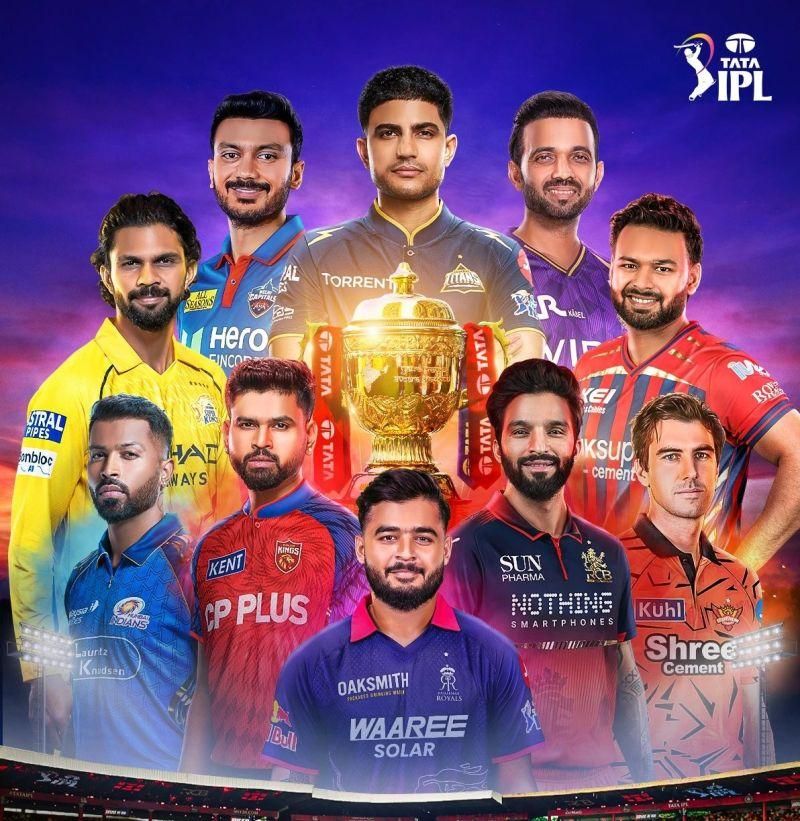
This guide covers all of it. Every captain's profile, their decision-making patterns in IPL 2026, verified win rates, and how to use captaincy intelligence as a live betting edge.
Why Captain Influence IPL Markets Is Real and Measurable
Some bettors treat captaincy as soft analysis. That is a mistake.
The specific ways a captain changes match odds:
- Toss decision directly affects which team bats in dew conditions, changing session line expectations before ball one
- Bowling rotation determines which bowler faces which batter at which phase, directly affecting wicket-taking and session totals
- Impact Player selection signals the captain's read on the match situation and the resources they are deploying
- Batting order changes (like sending themselves in earlier or dropping down) alter the team's scoring ceiling in specific overs
- Field placement decisions affect whether edges carry to fielders or fall safely, influencing wicket rates in live markets
None of these are subtle. They are observable in real time, and they move odds markets immediately.
All 10 Captains: Best IPL Captains Stats and Decision-Making Profiles
Shreyas Iyer (Punjab Kings)
Career captaincy record: 93 IPL matches as captain, 55 wins. Win rate: 59.14 percent.
Historical achievements:
- Led KKR to the IPL title in 2024
- Led PBKS to the IPL final in 2025 in his debut season with the franchise
- First captain in IPL history to lead three different teams to the final (DC in 2020, KKR in 2024, PBKS in 2025)
- Acquired for a record Rs 26.75 crore by PBKS ahead of IPL 2025
2026 captaincy pattern:
Iyer has been clearly role-oriented. He keeps batting positions fixed, gives players confidence through consistency, and is strong in chase situations. PBKS have won 5 of 6 matches while chasing this season under his leadership.
The tactical weakness that just emerged:
In Match 46 vs GT, his decision to delay Chahal's introduction until 14 overs was widely criticized. Sehwag and Tiwary both pointed out that using Chahal against Buttler earlier could have changed the result. Iyer also gave the last over to Stoinis instead of Arshdeep Singh. GT won by chasing the final 11 runs. Source: Cricket Times.
Betting implication:
PBKS under Iyer are a strong chase team. When they bat second, their win probability is historically higher than when they bat first. His toss call (consistently preferring to bowl first and chase) is predictable. After the last two losses, his bowling rotation has come under scrutiny. Watch how he deploys Chahal in remaining games.
Rajat Patidar (Royal Challengers Bengaluru)
Career captaincy record: 21 IPL matches as captain, approximately 16 wins. Win rate: 76 percent across IPL 2025 and 2026.
Historical achievements:
- Led RCB to their first-ever IPL title in 2025 after 18 years of franchise heartbreak
- First RCB captain in history to lift the IPL trophy
- Won 9 of 11 completed league matches in 2025 and became the only team to win every single away fixture in that season
2026 captaincy pattern:
Patidar's captaincy strength is match management. He reads the game situation rather than following standard templates. His use of Bhuvneshwar and Hazlewood has been particularly well-judged: he gives both their full powerplay allocation at venues where movement is expected and restricts them to specific death over spells at flat surfaces.
His tactical flexibility showed clearly in Match 42 against GT at Ahmedabad. Despite Hazlewood going for 56 runs in a single over from Shubman Gill, Patidar kept faith in Bhuvneshwar at the other end. Bhuvneshwar finished with 3/28. The bowling attack held together despite Hazlewood's expensive over. Source: NewsBytes, Outlook India.
Betting implication:
Under Patidar, RCB's bowling is consistently well-managed. When he wins the toss at surfaces with early movement, he consistently chooses to bowl first and sets Bhuvneshwar up for the first 3 overs. That pattern makes RCB's powerplay bowling market lines predictable and reliable.
Shubman Gill (Gujarat Titans)
Career captaincy record: 27 matches as captain, 14 wins. Win rate: 51.9 percent. Source: Outlook India.
Historical achievements:
- Took over GT captaincy from Hardik Pandya after IPL 2023
- India captain in ODI and Test cricket, combining international and IPL leadership simultaneously
2026 captaincy pattern:
Gill's captaincy has improved significantly mid-season. He started poorly in Match 1, delaying Prasidh Krishna's introduction until the 13th over while defending 163. GT lost. By Match 14, he trusted Prasidh to defend 12 in the final over. GT won narrowly. The adaptation from that early error to the later decision shows captaincy learning. Source: Cricem.
His toss decision in Match 46 (GT vs PBKS) was well-read. He won the toss, chose to bowl first at Ahmedabad citing conditions and chase confidence, and GT chased 163 in 19.5 overs, winning by 4 wickets. His persistence with Rashid Khan in the middle overs (2/19 vs RCB) and his decision to bat aggressively when he himself opens have both produced results.
Betting implication:
GT under Gill is a strong chasing side. His toss decisions at Ahmedabad consistently favor bowling first. The death bowling management is GT's main strength right now, with 9.1, the lowest death over-run rate in the tournament. Gill's over allocation decisions are tactically sound and rarely deviate from the plan he communicates at the toss.
Pat Cummins (Sunrisers Hyderabad)
Career captaincy record: 30 IPL matches as captain, 15 wins. Win rate: 50 percent. Source: Gulf News, Sunday Guardian.
Unique dimension:
Cummins is the only overseas captain in IPL 2026. He is also a frontline pace bowler who captains his own attack. That creates a specific tactical dynamic.
He sets his own field, decides when to bowl himself, and adjusts the slip cordon based on how the pitch is playing in real time. No other captain in IPL 2026 has that first-person feedback loop. A captain who is also the best bowler on the team tends to take the ball in the most critical situations rather than protecting their economy for a particular phase.
2026 specific note:
Cummins missed the first seven SRH matches with a recurring back injury. Ishan Kishan led SRH in his absence and won 3 consecutive matches, lifting SRH into the top four. Cummins returned for Match 36 against RR in Jaipur. Upon his return, SRH have gone WWWWL (5 games). Source: Cricem, Olympics.com.
Betting implication:
SRH are a different team when Cummins is fit and bowling. His ability to read conditions from inside the attack changes their wicket-taking pattern significantly. When Cummins is confirmed in the XI, SRH's bowling market lines become more restrictive. When he is rested or managed with reduced overs, it accounts for a weaker death bowling picture.
Ishan Kishan (SRH Stand-In Captain)
Worth separate mention because the interim captaincy story is one of the most interesting captain influence IPL examples in 2026.
When Cummins was injured and Ishan took over, SRH had won just 1 of their first 4 games. Under Kishan as interim captain, they won 3 consecutive matches, got into the top four, and rebuilt the season. He used domestic experience and familiarity with Indian conditions to make bowling changes that suited pitches Cummins had less experience with.
The transition back to Cummins once he returned was seamless. That reflects both Kishan's maturity and the clear framework the team has built around their main captain.
Betting implication:
If Cummins is injured again in the playoffs, SRH's market position should not collapse. Kishan showed he can captain the side effectively.
Riyan Parag (Rajasthan Royals)
At 22, Parag is the youngest captain in IPL 2026. Sanju Samson was traded to CSK, and Parag stepped into the role.
What the captaincy change means:
RR had Jofra Archer's fitness to manage from the start. Parag has leaned on Ravindra Jadeja's experience as a senior presence in the setup. His bowling rotation decisions have been reasonable but inconsistent.
The biggest captaincy success of Parag's season so far: backing Sooryavanshi to open aggressively even after the teenager had a 0 and an 8 in two consecutive games. Keeping faith in a 15-year-old through form dips is a captaincy quality that is not always given credit in the odds.
Betting implication:
RR's toss decisions under Parag have been conservative but sensible. He typically defers to condition-based decisions rather than personal preference. At Jaipur, where RR have their home record to protect, he has been particularly focused on bowling first.
Hardik Pandya (Mumbai Indians)
Career captaincy record: 60 IPL matches, 35 wins. Win rate: 58.3 percent. Source: Outlook India.
Historical achievements:
- Led GT to the IPL title in their debut season in 2022 (only captain to win the title in a franchise's debut season)
- Led GT to the final in 2023
2026 context:
MI has struggled this season with 4 points from 8 matches. Hardik has been honest about it. After the CSK loss, he said he "exhausted every bowling option" and acknowledged MI were outplayed in all departments. That kind of self-awareness from a captain is important information. It signals no excuses, which usually precedes a correction.
MI's win over LSG in Match 47, chasing 229, was the most recent result under his leadership, showing the batting when fully functioning can deliver. Source: NewsX.
Betting implication:
MI under Pandya is dangerous when their batting fires. His captaincy decisions around bowling are less consistent, which is partly squad-dependent. The Santner absence has weakened his middle-over options. When Bumrah is confirmed and bowling 4 overs, Pandya's tactical picture becomes cleaner because Bumrah essentially self-manages his own over allocation.
Ruturaj Gaikwad (Chennai Super Kings)
Career record: 19 matches as captain, 8 wins. Win rate: 42 percent. Source: Gulf News.
CSK are 6 points from 10 matches and in difficult playoff territory. Gaikwad's captaincy has been steady but the team around him has not delivered consistently. He has admitted the expectations are enormous following the transition from MS Dhoni's era.
The contrast with Dhoni is unavoidable. Dhoni and Rohit Sharma both share the record of 5 IPL titles each as captains of their respective franchises across their careers. Gaikwad is stepping out of that shadow in real time.
Betting implication:
CSK under Gaikwad are most dangerous at Chepauk, where the conditions suit their bowling. Away from home, his captaincy has not consistently produced the same match management quality.
Ajinkya Rahane (Kolkata Knight Riders)
Career captaincy record: 38 IPL matches, 14 wins. Win rate: 36.8 percent. Source: Gulf News.
KKR have 3 points from 8 matches this season. Rahane took over from Shreyas Iyer after KKR won the 2024 title and the franchise finished eighth in 2025 under his leadership. The team's problems are not about captaincy tactics. They are structural. Batting inconsistency and death bowling issues are the primary factors.
Betting implication:
KKR's odds should be read based on squad form and match context, not the captain's premium. Rahane's presence as captain adds nothing to pre-match odds calculations for any betting market. His tactical adjustments have not reversed the team's form trajectory.
Rishabh Pant (Lucknow Super Giants)
Career captaincy record: 57 IPL matches, 27 wins. Win rate: 47.4 percent. Source: Gulf News.
Pant returned from his injury comeback ahead of IPL 2025 and has been LSG's most prominent personality. But as a wicketkeeper and captain, his match management decisions have been more cautious than his batting personality suggests.
LSG has 4 points from 9 matches this season. His captaincy under this pressure has been solid but not game-changing. The most impactful decision in their season came from Mohsin Khan's 5/23 haul (Mohsin's execution, not specifically Pant's tactical innovation).
How IPL Strategy Captain Decisions Show Up in Betting Markets
The Toss Decision
This is the most pre-market signal a captain gives. And it is public, announced 30 minutes before the first ball.
What each decision type means for odds:
Chooses to bowl first at a dew-heavy venue: His team is likely to bat in better conditions. The opposition's first innings lambi should be read conservatively. His team's second innings lambi should be read higher.
Chooses to bat first at a spin-friendly surface (Chepauk, Eden): He is either backing his batting to post a big enough total for his spinners to defend, or he is unfamiliar with how the pitch plays. Either way, the first innings lambi is the primary bet.
Chooses to bat first at a flat surface when conditions do not demand it: This is the riskiest toss call. Watch live odds shift after the toss in this scenario. Markets frequently see the bowling team's win probability rise when a batting-first decision at a neutral surface gives no specific advantage.
Bowling Rotation as Real-Time Intelligence
A captain's bowling change is visible to the bettor following the live score. And it can shift a session line's expected outcome before the market fully adjusts.
From Match 46 (GT vs PBKS):
PBKS had Chahal, an experienced wrist-spinner with 391 career T20 wickets, sitting unused while GT's left-handed batters, Gill and Buttler, were in the middle. Gill smashed the pace attack. The live session line for GT's second innings chase was not reflecting the reality that PBKS's best middle-over option was not being used.
Anyone who noticed Chahal's absence from the attack in overs 7 to 13 had a real signal that PBKS's bowling plan was sub-optimal. Backing GT's chase of Lagai in the middle-over session would have been logical with that information.
Impact Player Timing
Each captain's impact player announcement is live information. We covered this in detail in the Impact Player guide. The key captaincy element is this: some captains use the Impact Player at the most logical moment. Others react to pressure rather than plan.
Patidar at RCB has generally used the rule at planned moments. Iyer at PBKS has been flexible. Gill at GT has been deliberate, naming specific Impact Player candidates in advance of matches based on the opposition.
The captain who plans their impact player usage in advance gives you a pre-match signal through the substitutes list. The captain who uses the rule reactively gives you a live signal when the announcement comes mid-innings.
Batting Order Adjustments
A captain who changes their own batting position to respond to match situations affects both their individual runs market and the team's session lines.
Patidar at RCB occasionally promotes himself to stabilize a middle-order wobble. When he does, his individual batting line changes. When he holds himself back to let David and Jitesh bat through, his own market line is affected.
Iyer at PBKS has been consistent in his batting position (number 4). That consistency makes his individual runs more predictable than for captains who move around the order.
Historical Leadership Impact Cricket: The Captains Who Changed IPL
Purely as context for understanding what elite captaincy looks like against current leaders.
MS Dhoni and Rohit Sharma: Both won 5 IPL titles as captain. The only players to reach this milestone. Dhoni's most famous captaincy quality was the two-over bowling plan where he would hold Malinga or another death specialist for specific batters in the final 3 overs. That tactical hoarding of a specific bowler was a signature move.
Shreyas Iyer's milestone: He is already the only captain to lead three different teams to the final. That kind of adaptability across different squad environments is what sets elite IPL leaders apart.
Rajat Patidar's 2025: He won 10 of 13 completed matches in his debut season as captain. Won every away fixture. That way consistency is the hardest thing to achieve in a league where home surfaces are specifically prepared for home teams.
Shubman Gill's mid-season improvement: His Match 1 error (delaying Prasidh) and his Match 14 correction (trusting Prasidh for the final over) are the kind of in-season learning that marks a captain growing into the role.
Betting Framework: Using Captaincy Intelligence Before and During Matches
Pre-match preparation:
Check the captain's toss tendency at the specific venue. Iyer consistently chases. Patidar consistently bowls first when there is movement. These patterns are trackable across the season.
Check whether the captain's preferred bowling rotation matches the pitch conditions. If a captain relies heavily on pace on a day when the surface is flat and spin-friendly, their bowling plan is likely to be tested.
Check the substitutes list. Some captains (Gill at GT) are very deliberate about naming specific Impact Player candidates. Reading that list against the match situation gives you a pre-match edge.
During the match:
After the toss, note who is bowling and in what order. Unusual rotation early is a signal the plan has changed.
Track which IPL top bowler is being protected. If Bumrah has not bowled two overs by over 8, he is being saved for specific batters or for the death. That changes the middle-over and death session lines.
Watch for Impact Player timing. An early impact player call (before 10) signals urgency. A planned innings-break substitution signals strategy. The difference shows up in how the odds move immediately after.